
NEWS

The Mythological Semantics of Place-Related Cults Discussed at the Institute of Folklore
The scientific seminar was held at the Department of Mythology of the Institute of Folklore of ANAS. The seminar was attended by staff members of the Department of Mythology and other departments of the Institute.
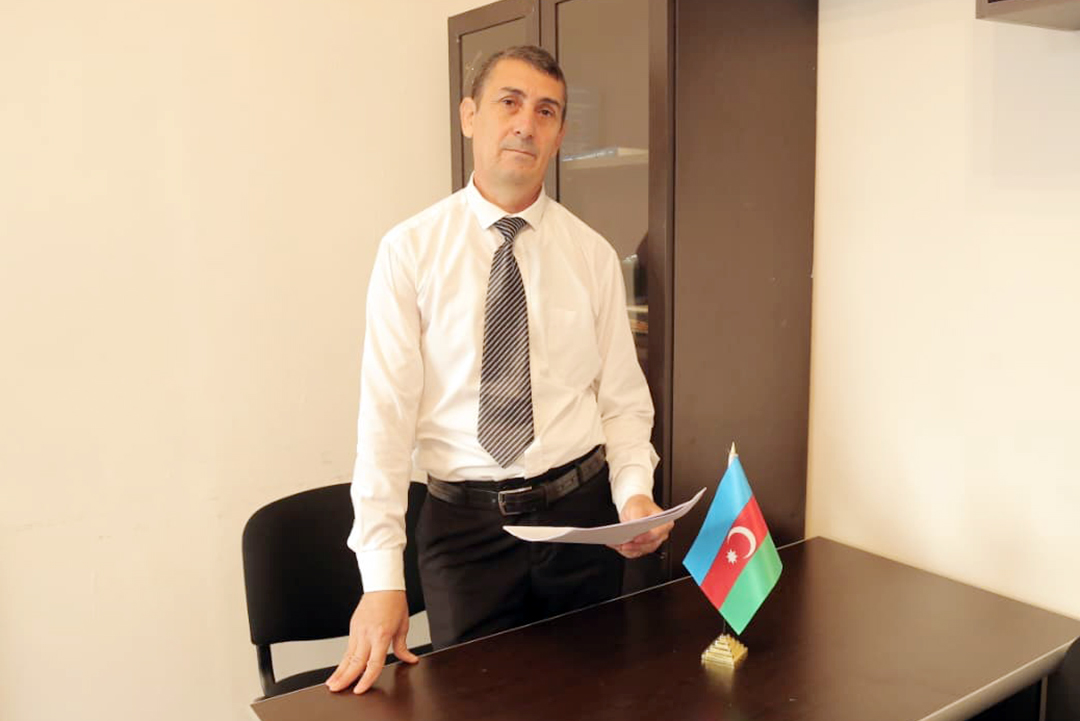
At the seminar, Shakir Alif oglu Albaliyev, the leading researcher at the Department of Mythology, Doctor of Sciences in Philology and Associate Professor, made a report entitled “Religious and Mythical Beliefs Associated with the Cults of Mountains and Stones in Azerbaijani Folklore”.
In the report it was mentioned that the significance of the mythological worldview associated with the cults of mountains and stones in the rich folklore of the Azerbaijani people. The speaker substantiated his arguments by referring to the veneration of the Tumas Ata shrine on Mount Tumas in the region Jabrayil, which he had personally visited and the Bashikesik Gunbad monument, located in the village of Dag Tumas and dating approximately to the fifteenth century, both of which are regarded as sacred by the local population. He also mentioned existing views that mountains are considered the centre of the world in various mythological beliefs and systems of thought, “as they establish a connection between the three realms: the underworld, the earthly world and the celestial world”.
According to mythological beliefs and systems of thought, creation is understood to have begun with mountains. Mountains are perceived as entities that maintain the world in a stable state and connect the three realms. Offerings to Allah are completed through rituals performed on mountain summits. The ancient Turks believed that every entity in nature, including mountains, possessed a spirit.
Shakir Albalıyev noted that sacred shrines representing the cults of mountains and stones in Azerbaijan should be interpreted not merely as “remnants of ancient beliefs,” but also as relics reflecting mythological thought that have been transmitted to the present through cultural memory and have acquired socio-cultural significance.
When studying contemporary manifestations of the cult of stones in the context of the mythological worldview and cultural memory, it is essential to draw on mythological thought and ethnocultural traditions.
The seminar concluded with answers to questions of the participants and clarifications regarding the issues discussed.