
NEWS
Issues of the Digital Reproduction of Occupational Jokes Explored at the Institute of Folklore
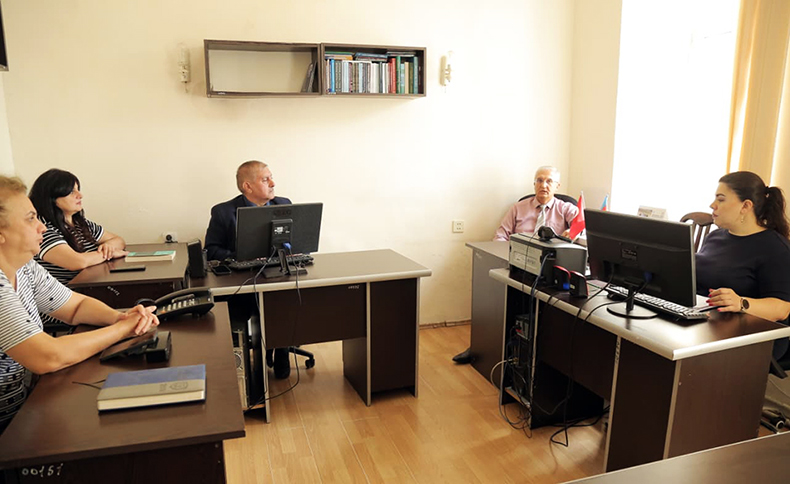
The scientific seminar was held at the Department of Folklore Theory of the Institute of Folklore of ANAS. During the seminar the report entitled “Occupational Jokes and the Reproduction of Jokes in the New Digital Environment: A Theoretical Approach” was presented by Professor Fuzuli Bayat, Doctor of Philological Sciences and Head of the Department.
The paper examined, from a theoretical and empirical perspective, the transition of occupational jokes – one of the most dynamic and socially sensitive genres of contemporary urban folklore – from traditional oral performance to the digital environment, as well as the mechanisms through which they are reproduced in this new space.
It was noted that occupational folklore and jokes emerge from the specific characteristics of professional activities, the challenges encountered in the workplace, and institutional relationships. These genres serve not merely as forms of entertainment but also as social barometers, means through which individuals interpret their working relationships and symbolic defense mechanisms developed in response to various forms of pressure. The paper explored both the esoteric functions of occupational jokes, which strengthen solidarity within professional groups, and their exoteric functions, which reflect the stereotypes that society associates with members of particular professions.
The seminar mentioned the theoretical significance of integrating classical folkloristic methodology with contemporary approaches in cyber-folklore and urban anthropology. It was noted that folklore should not be regarded merely as a relic of the past or as archival material. In the context of digital technologies, corporate alienation, and changing labor relations, folklore remains a living cultural form that continually reproduces itself.
In conclusion, the importance of studying occupational jokes not only in traditional oral settings but also on new digital communication platforms was highlighted. Particular emphasis was placed on the need to investigate the changing functions, dissemination mechanisms, and textual transformations of this genre through the application of contemporary theoretical approaches.