
NEWS
Children’s Songs in South Azerbaijani Folklore and the Tradition of Anthology Compilation Examined at the Institute of Folklore
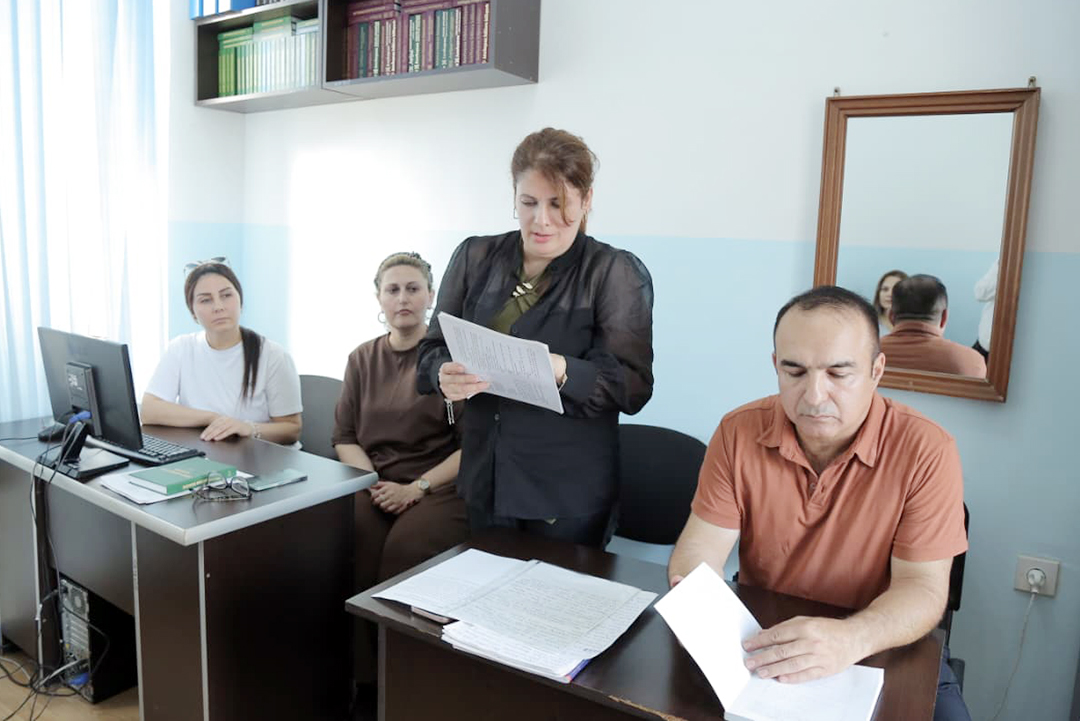
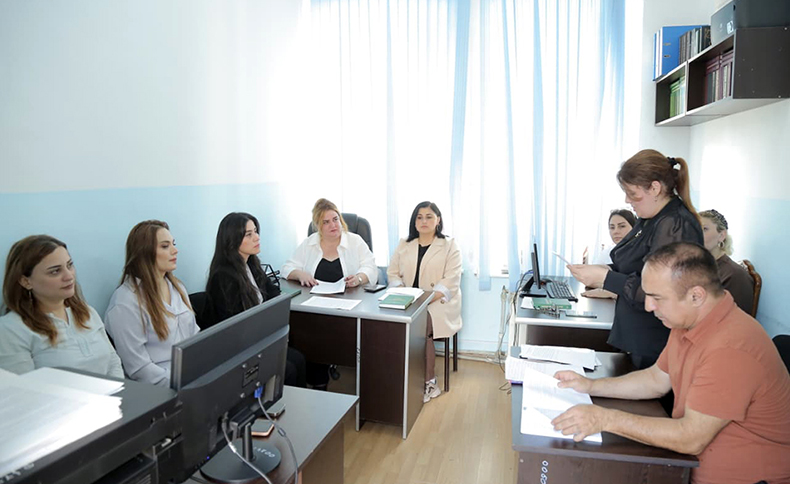
The scientific seminar was held at the South Azerbaijani Folklore Department of the Institute of Folklore of the Azerbaijan National Academy of Sciences (ANAS) on the topics of “Children’s Songs in South Azerbaijani Folklore” and “The Legacy of Mohammadali Farzaneh and the Anthology Compilation Traditions of His Era”.
At the seminar the research fellows of the department Saadat Ibrahimli and Ilahe Gurbanova made presentations on their respective topics.
In her presentation entitled “Children’s Songs in South Azerbaijani Folklore” Saadat Ibrahimli discussed the place of children’s songs in South Azerbaijani folklore, their genre characteristics, content and poetics, as well as their role in preserving the national and spiritual heritage. She highlighted that children’s folklore reflects a people’s worldview, life experience, moral values and aesthetic sensibilities. The importance of these genres in developing children’s speech and memory skills, fostering a sense of rhythm and expanding their communication abilities was also emphasized.
The seminar’s other presenter, Ilahe Gurbanova, made a paper entitled “The Legacy of Mohammadali Farzaneh and the Anthology Compilation Traditions of His Era”. She provided information about the scholarly and literary legacy of Mohammadali Farzaneh, a prominent figure in twentieth-century South Azerbaijani folkloristics, his work in collecting folklore and the anthology compilation traditions of his time.
In her presentation Ilahe Gurbanova discussed the principles of collecting and publishing folklore materials followed by intellectuals active during the same period as Farzaneh, including Samad Behrangi, Behruz Dehqani, Abolqasem Shirazi, Huseyn Duzgun and Habib Sahir. To illustrate the folkloric landscape of South Azerbaijan’s various geographical regions, texts selected from anthologies were classified by region and presented to the seminar participants.
One of the main focuses of the presentation was a comparative analysis of the rich folklore materials collected in the Tabriz and Khorasan regions. It was also mentioned that anthologies compiled in the second half of the twentieth century were significant not only for folkloristics, but also for preserving the historical memory of the Azerbaijani language and national identity.
The seminar continued with an exchange of views on the topics discussed.