
NEWS
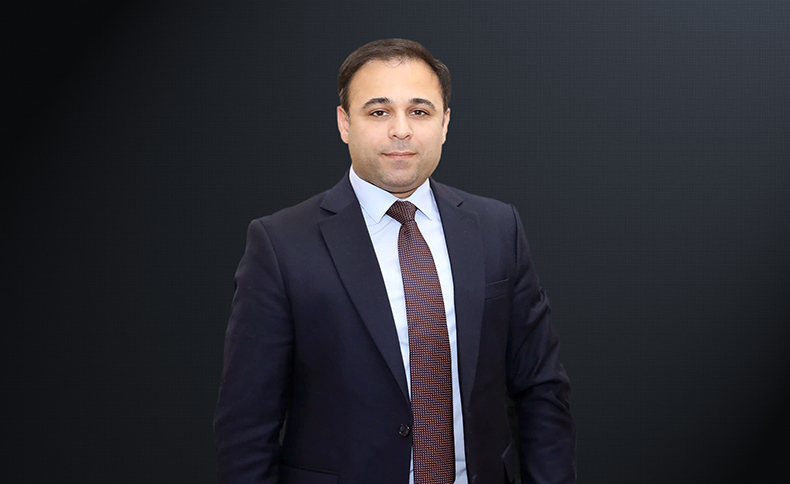
Hikmat Guliyev: The digital future of the Azerbaijani language depends on strengthening national linguistic consciousness and folkloric thinking
The rapid advancement of globalization, digitalization and artificial intelligence technologies is expanding the role of the Azerbaijani language within the emerging communication environment. Under these circumstances, preserving the mother language is no longer limited to safeguarding the norms of the literary language, it has also become a matter of sustaining national identity, cultural memory and folkloric thinking.
These views were expressed by Hikmat Guliyev, Director of the Institute of Folklore of the Azerbaijan National Academy of Sciences (ANAS) and Doctor of Sciences in Philology, in an interview with AZERTAC. He noted that the Azerbaijani language was one of the greatest treasures of the nation, preserving the historical memory, national identity and system of spiritual values of the Azerbaijani people. According to his thought language was not merely a means of communication, but also a fundamental social institution that shapes a people’s worldview, collective experience and cultural self-awareness.
The scholar mentioned that President Ilham Aliyev had repeatedly described the preservation of the Azerbaijani language as one of the fundamental conditions of national identity. In his public addresses, the President had characterized safeguarding the purity of the mother language in the context of globalization as the moral responsibility of every citizen. This approach established new scientific and methodological priorities for the humanities, including folklore studies.
The director of the Institute further stated that, in the era of globalization, the primary challenge was not only to adapt to technological innovations, but also to preserve national distinctiveness. In this process, folkloric thinking played a crucial role. The collective cognitive model developed by the people over centuries evaluates new linguistic elements through the prism of national culture and the system of traditional values.
According to the scholar, protecting the Azerbaijani language should not be confined to adherence to orthographic norms alone. The principal objective is to strengthen national linguistic consciousness, reinforce collective cultural memory and folkloric thinking and simultaneously support the development of an Azerbaijani-language virtual folklore environment.