
NEWS
The Scientific and Theoretical Foundations of Turkological Folklore Studies were discussed at the International Symposium
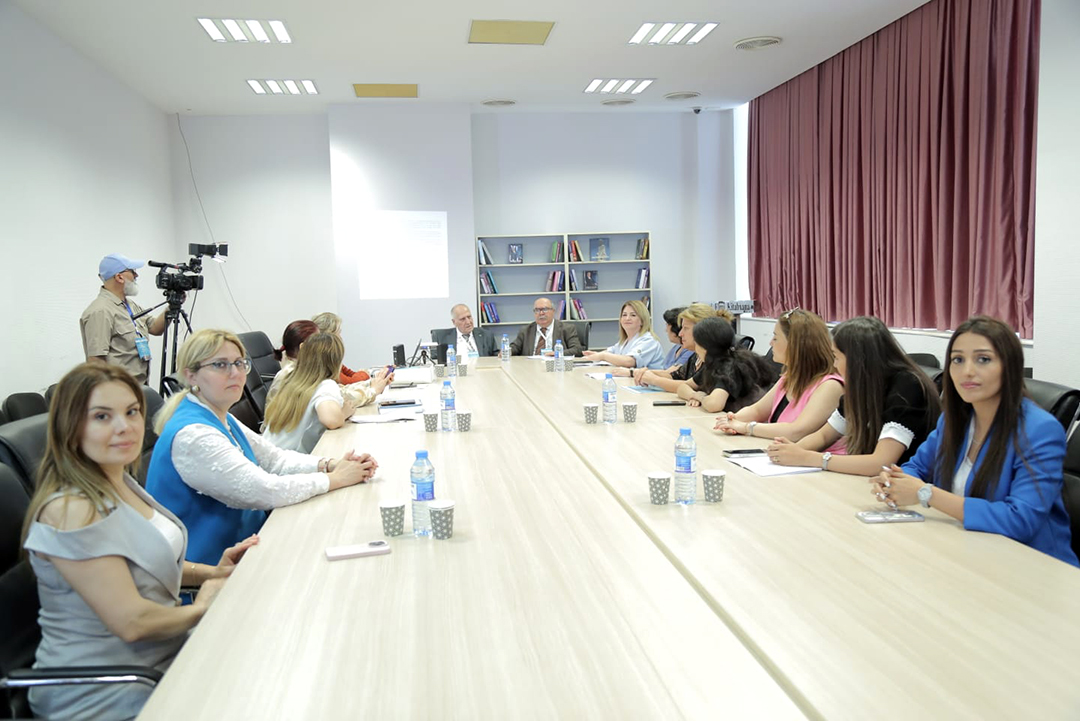
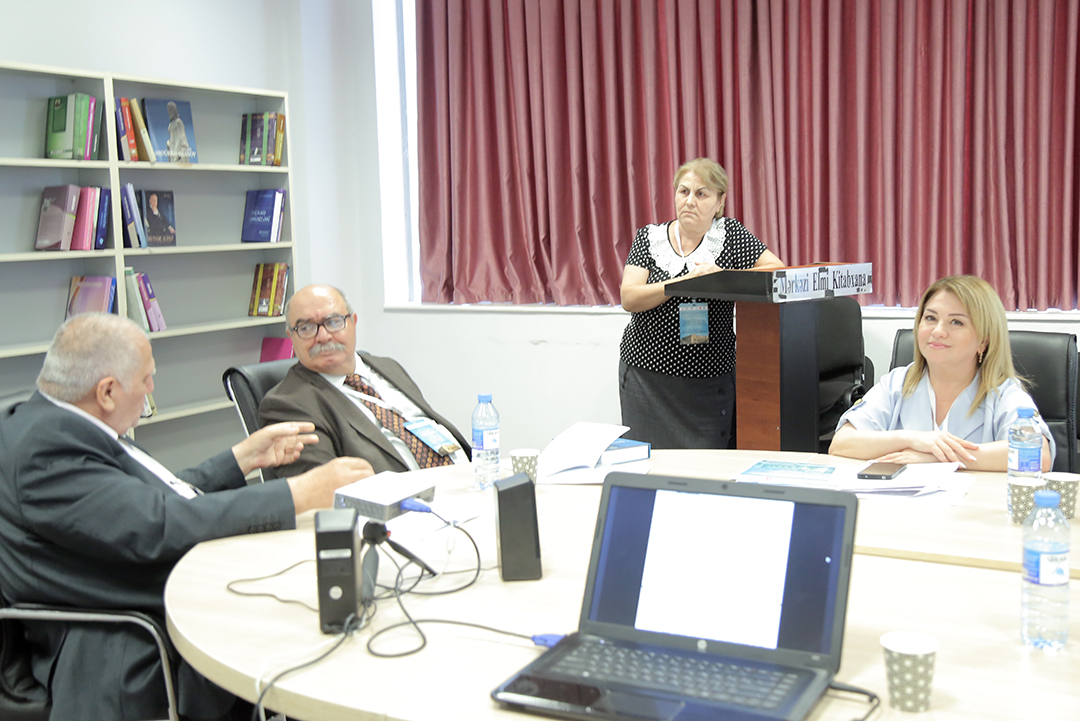
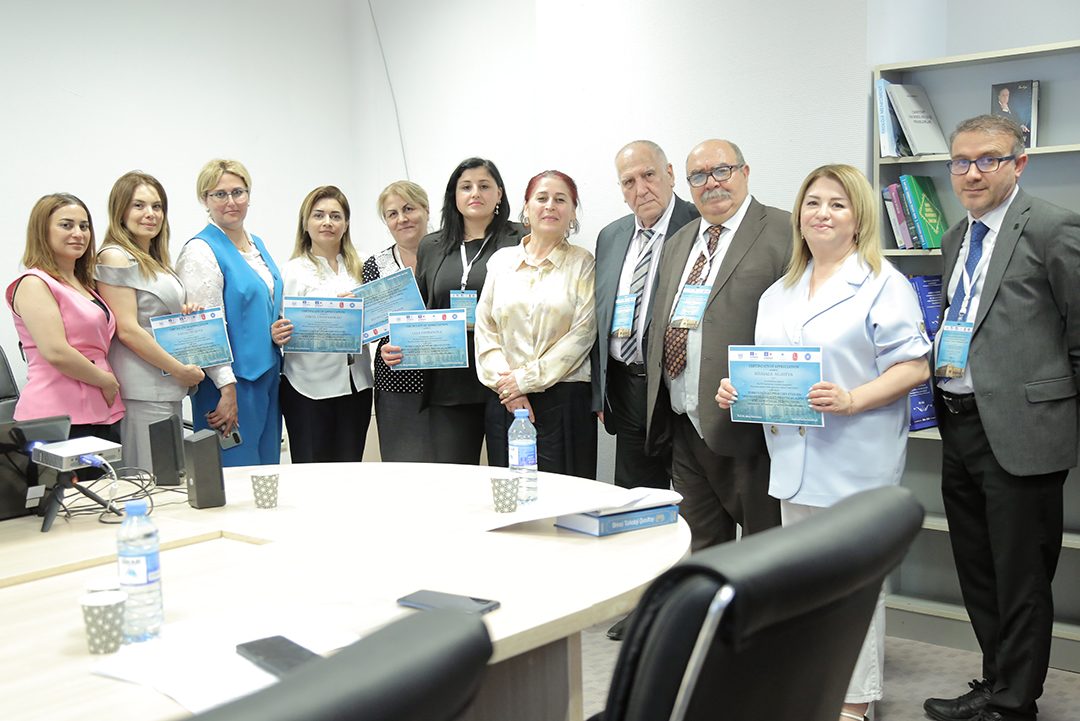
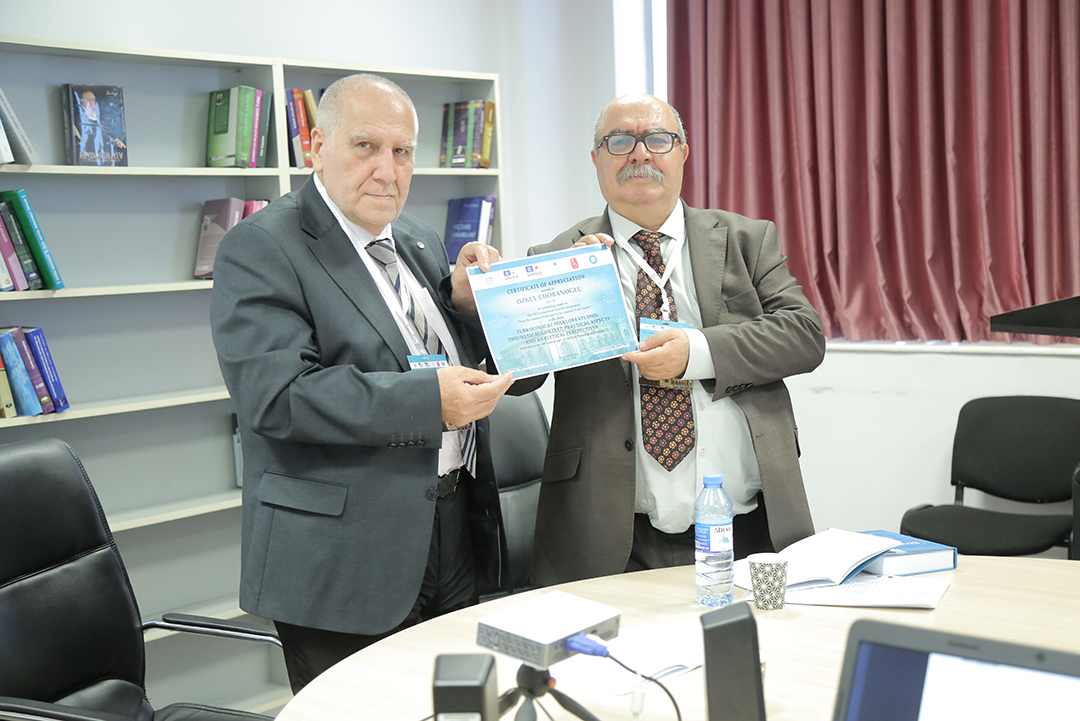
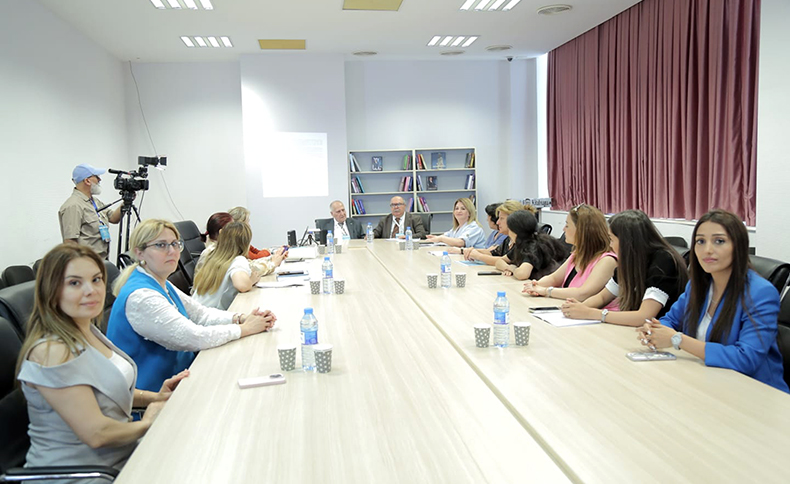
As part of the VIII International Symposium “From the Common Turkic Past to the Common Turkic Future” jointly organized by the Azerbaijan National Academy of Sciences (ANAS) and the Institute of Folklore ANAS, the third panel session, entitled “The Concept of Turkological Folklore Studies: From Ideological-Romantic Approaches to Scientific and Theoretical Discourse” was held on July 2. The session was moderated by Professor of Hacettepe University Ozkul Chobanoglu and Professor of the ANAS Institute of Folklore Ramazan Gafarli.
The panel addressed the theoretical and methodological foundations of Turkological folklore studies, its emergence as an independent academic discipline, the reassessment of its scholarly legacy in the context of contemporary research, the study of the common folklore heritage of the Turkic world, the adaptation of family folklore to the modern social environment, eco-folklore approaches and the study of semiotic symbols in folklore.
The opening presentation was delivered by Professor Ozkul Chobanoglu, who spoke on the theme “Theoretical Perspectives of Turkic Folklore as a Discipline of Turkology”. His paper examined the place of Turkic folklore within the system of Turkological studies, the theoretical contributions of various schools of folklore research established in different countries, the significance of contemporary methodological approaches and the role of folklore in fostering a shared scholarly perspective across the Turkic world.
Professor Ramazan Gafarli then presented a paper entitled “Turkology and Folklore Studies: Interrelations and Issues of Academic Status”. He mentioned that the concept of “Turkological Folklore Studies” represents an independent field of research situated at the intersection of Turkology and folklore studies. His presentation outlined the theoretical and methodological framework of the discipline and discussed its place within the modern system of the humanities.
Leading Researcher at the ANAS Institute of Folklore, PhD Khayala Aghayeva presented a paper entitled “The Scientific and Practical Significance of the First Turkological Congress in the Study of the Common Turkic Folklore Heritage”. She discussed the scientific and methodological principles established by the 1926 Congress for the comparative study of the shared folklore heritage of the Turkic peoples.
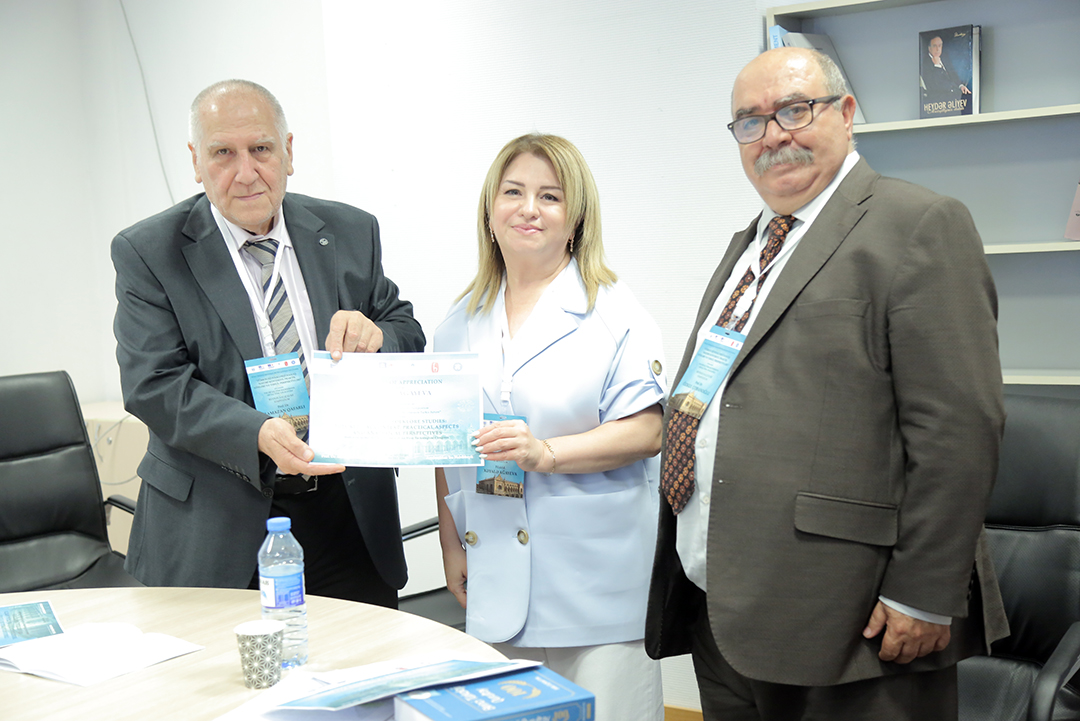
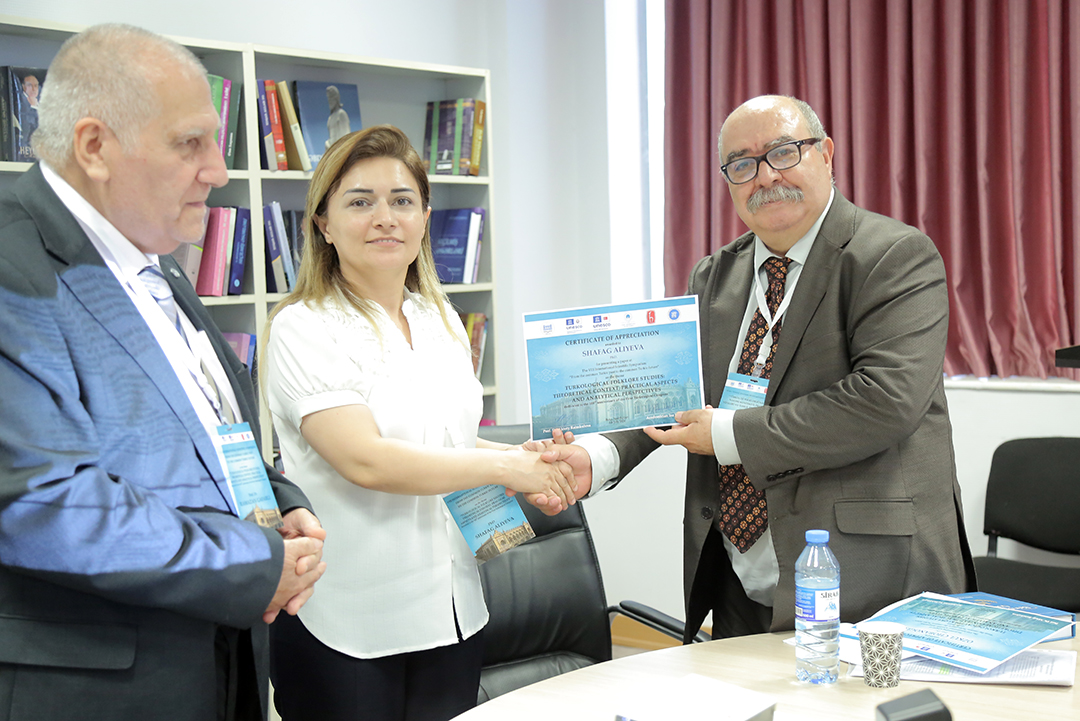
The staff member of the ANAS Central Scientific Library Shafag Aliyeva made a presentation on the theme “The Adaptation of Family Folklore to the Social Environment: From Tradition to Modernity”. She analyzed the transformations in the content and functions of family folklore under the conditions of globalization and digitalization, highlighting its role in preserving national cultural values and collective memory.
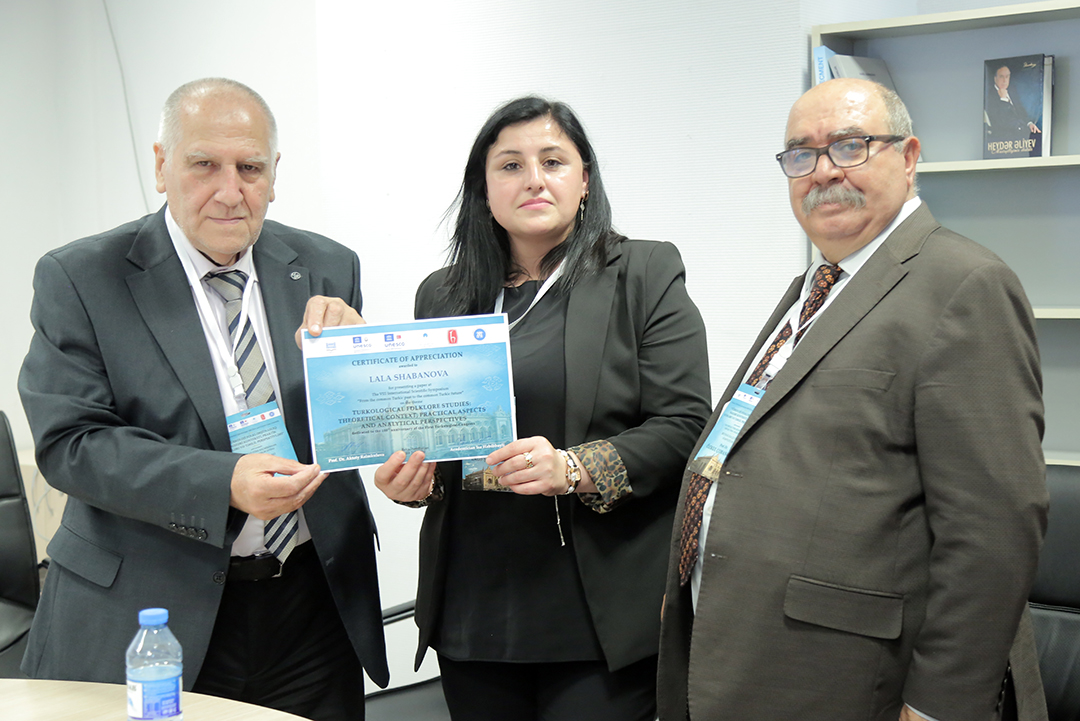
Senior Researcher at the ANAS Institute of Folklore Lala Shabanova presented a paper entitled “Eco-Folklore Approaches in Turkological Folklore Studies”. She mentioned the importance of studying the interrelationship between humans, nature and culture through folklore materials.
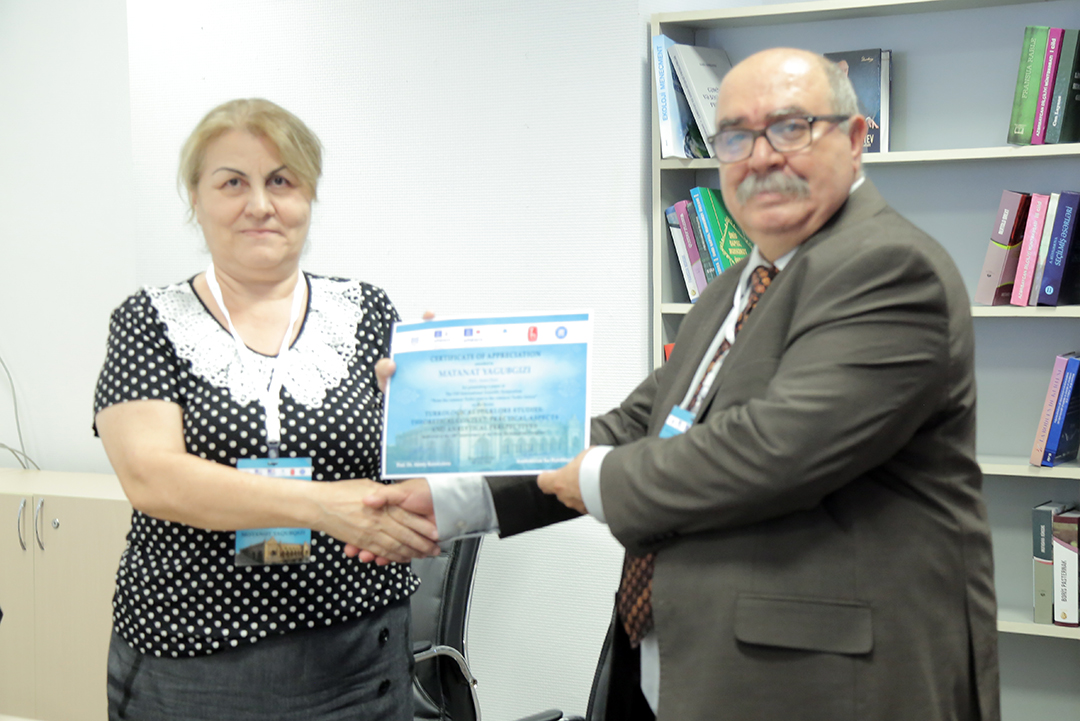
The final presentation was made by the Leading Researcher at the ANAS Institute of Folklore, PhD, Associate Professor Matanat Yagubgizi. In her paper “The Number Seven in the Semiotic System: Symbol and Cultural Memory” she studied the role of symbols in shaping ethno-psychological consciousness and analyzed the semantic functions of the number seven in preserving cultural memory and ethnic identity.
The panel concluded with the extensive exchange of views on the future development of Turkological folklore studies, its theoretical and methodological challenges and current issues related to the study of the shared cultural heritage of the Turkic world.