
NEWS
The publication from the series “Folklore of the Turkic Peoples” has been published at the Institute of Folklore ANAS
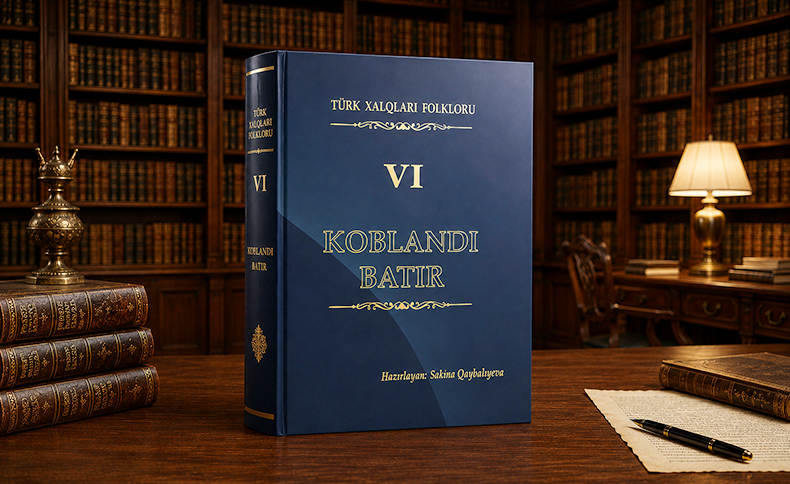
The latest volume in the series “Folklore of the Turkic Peoples” by the Institute of Folklore of the Azerbaijan National Academy of Sciences (ANAS), titled Koblandy Batyr, has been published. Published by the decision of the Scientific Council of the Institute, the book was one of the significant projects aimed at studying and promoting the shared epic and cultural heritage of the Turkic peoples.
The book was translated, annotated and introduced by PhD in Philology and Associate Professor Sakina Gaybaliyeva. The scientific editor is Professor Afzaladdin Asgar.
The publication presents the Azerbaijani translation of Koblandy Batyr, one of the greatest heroic epics of the Kazakh people. The book consists of three parts. The first part contains an extensive research essay entitled “The Heroic Epic Koblandy Batyr in the Kazakh Epic Tradition” which examines the historical origins of the epic, ideological and thematic features, textual variants, performance tradition and its place within the Kazakh epic heritage. The second part presents the complete original text of the epic alongside its Azerbaijani translation. The third part provides descriptions of twenty-six out of the twenty-nine known variants of Koblandy Batyr recorded by Kazakh folklorists.
In the study a scholarly analysis of the various versions of the epic, their geographical distribution, narrative characteristics and their role within the system of the Kazakh heroic epic tradition are offered.
In addition to providing valuable insights into medieval Kazakh society, family structure, intertribal relations and other aspects of Kazakh cultural life, this publication enables Azerbaijani readers to become more closely acquainted with the rich epic heritage of the Turkic peoples. It also contributes significantly to the study of the shared spiritual and cultural ties among Turkic nations and promotes further scholarly research in the field of folklore studies.
Link to the publication.