
NEWS
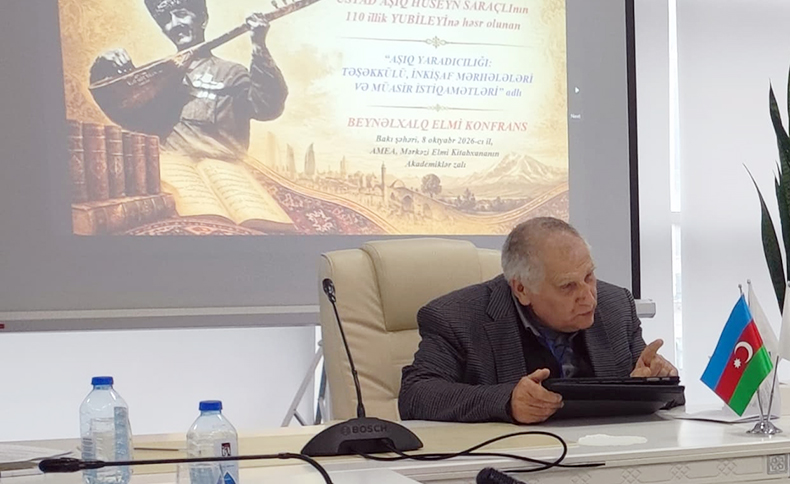
Professor Ramazan Gafarli Participates in an International Scientific Conference as Section Chair and Presenter
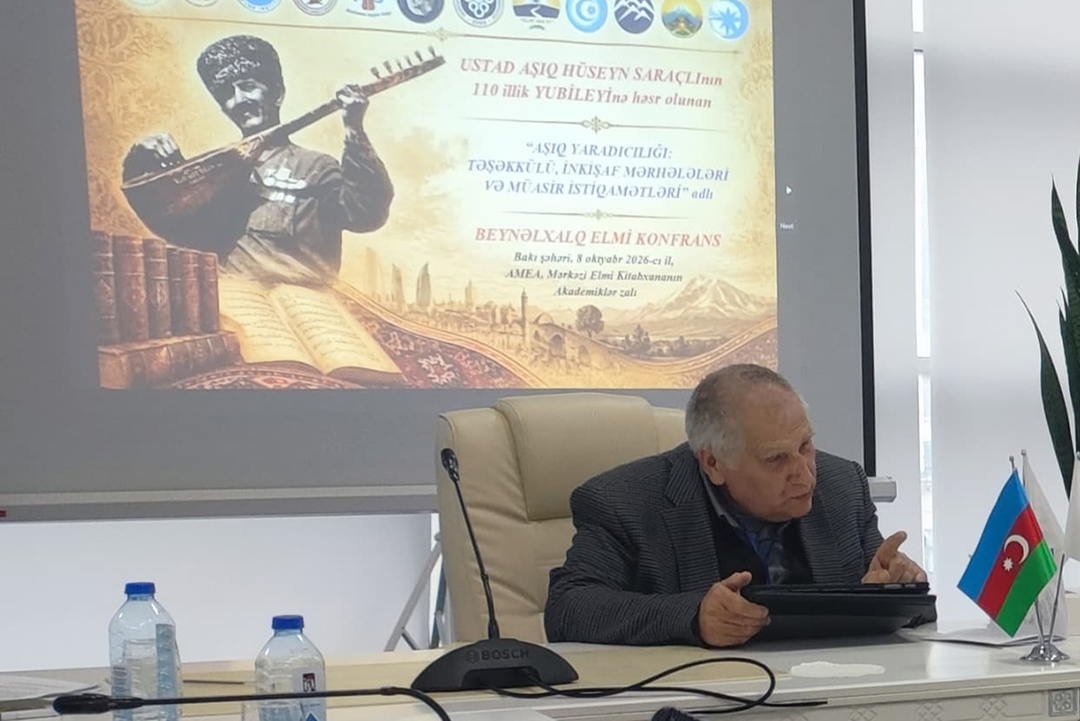
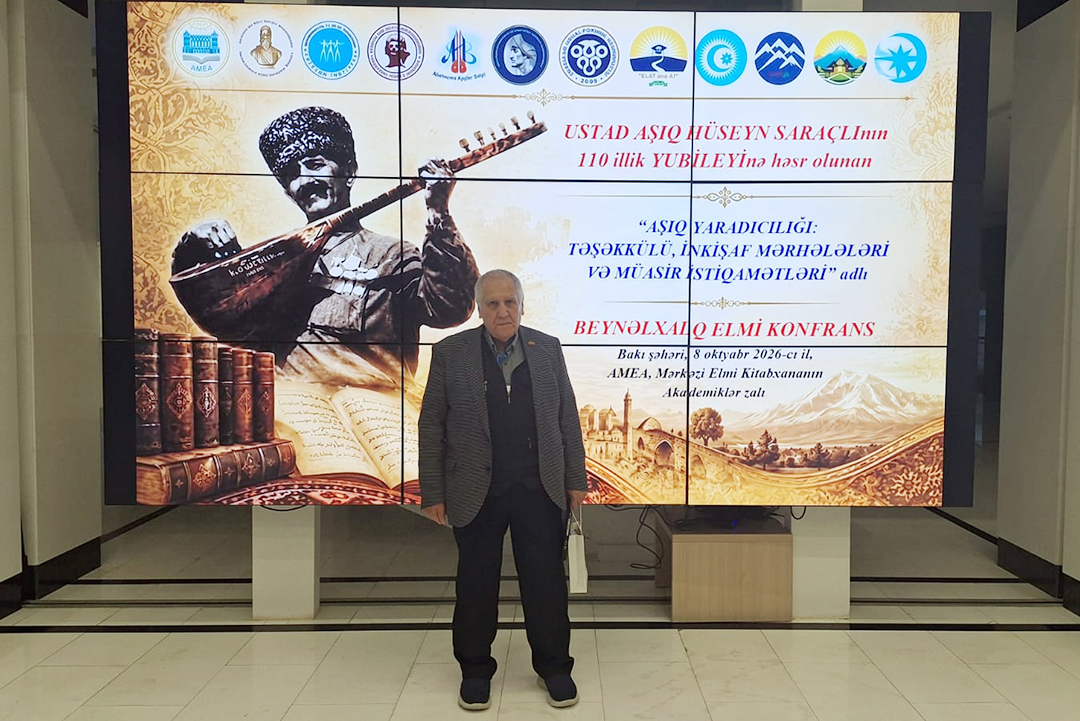
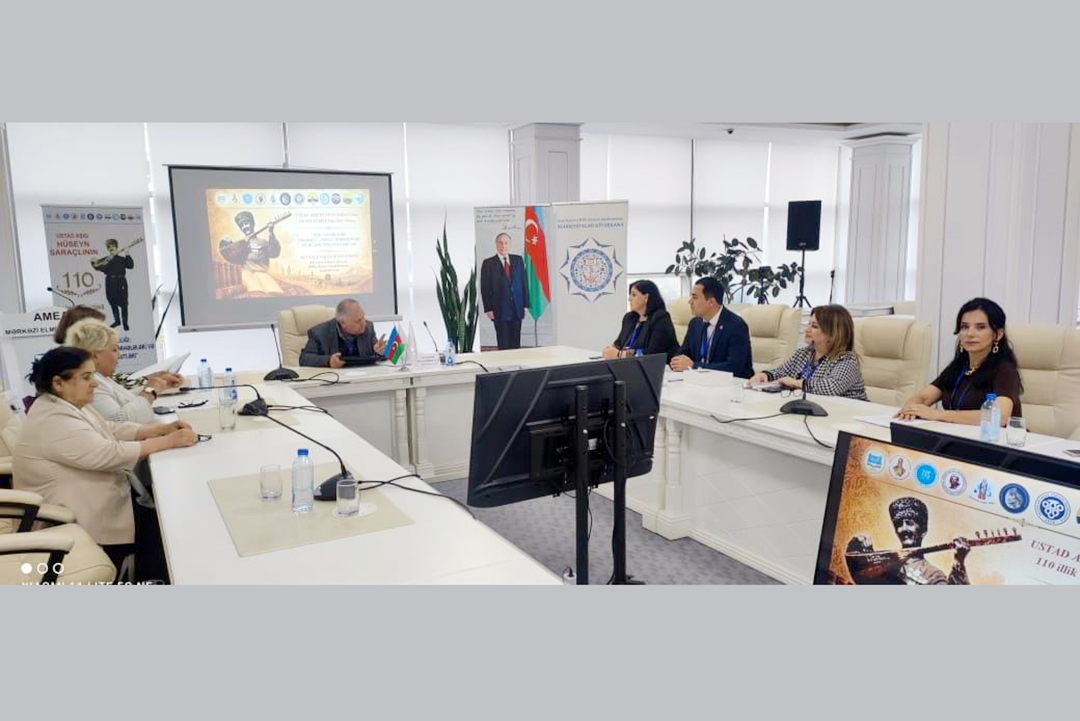
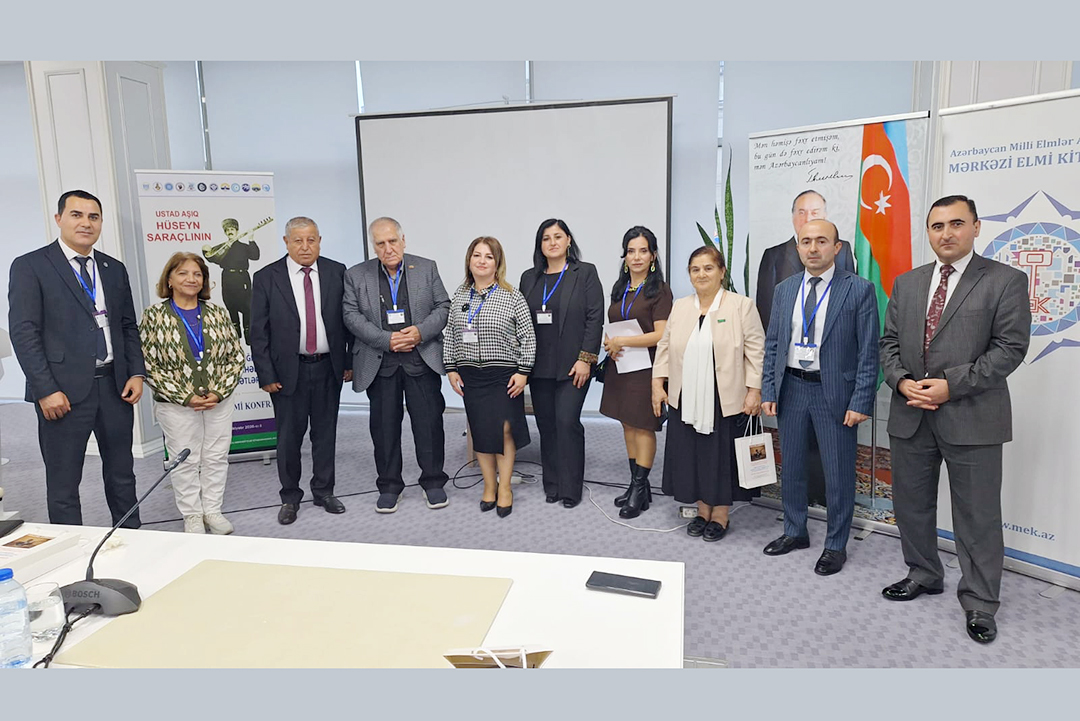
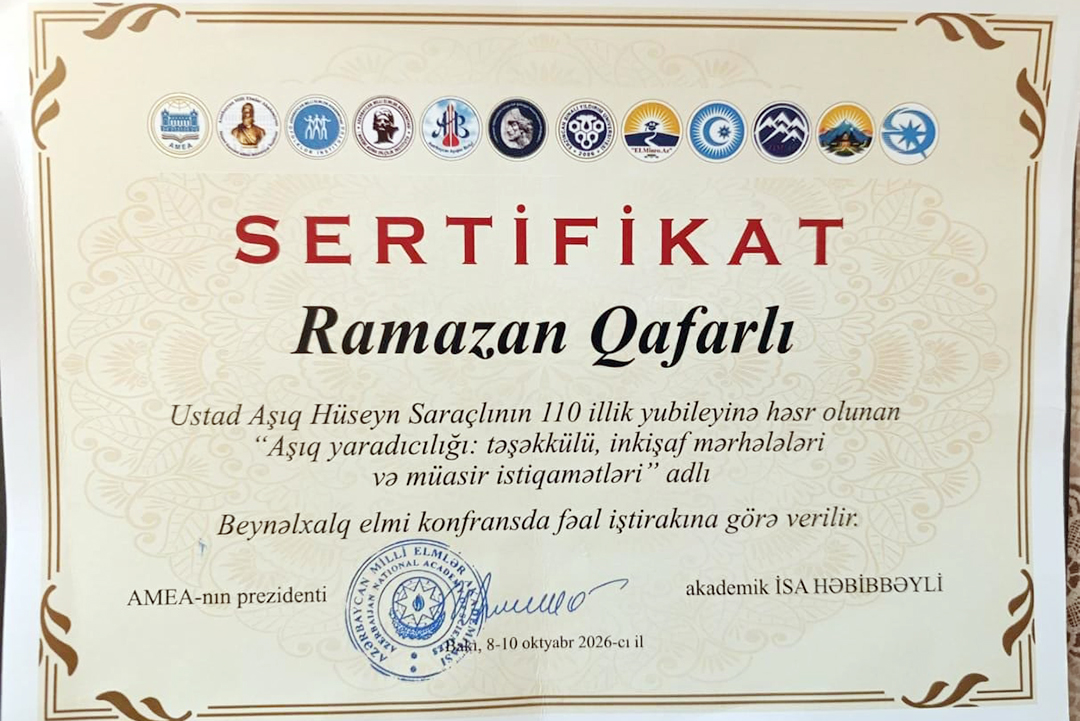
On the 8th of October 2026 the international scientific conference entitled “Ashiq Creativity: Its Formation, Stages of Development, and Contemporary Trends” was held in the Academicians’ Hall of the Central Scientific Library of the Azerbaijan National Academy of Sciences (ANAS). The conference was dedicated to the 110th anniversary of the birth of master Ashiq Huseyn Sarajli.
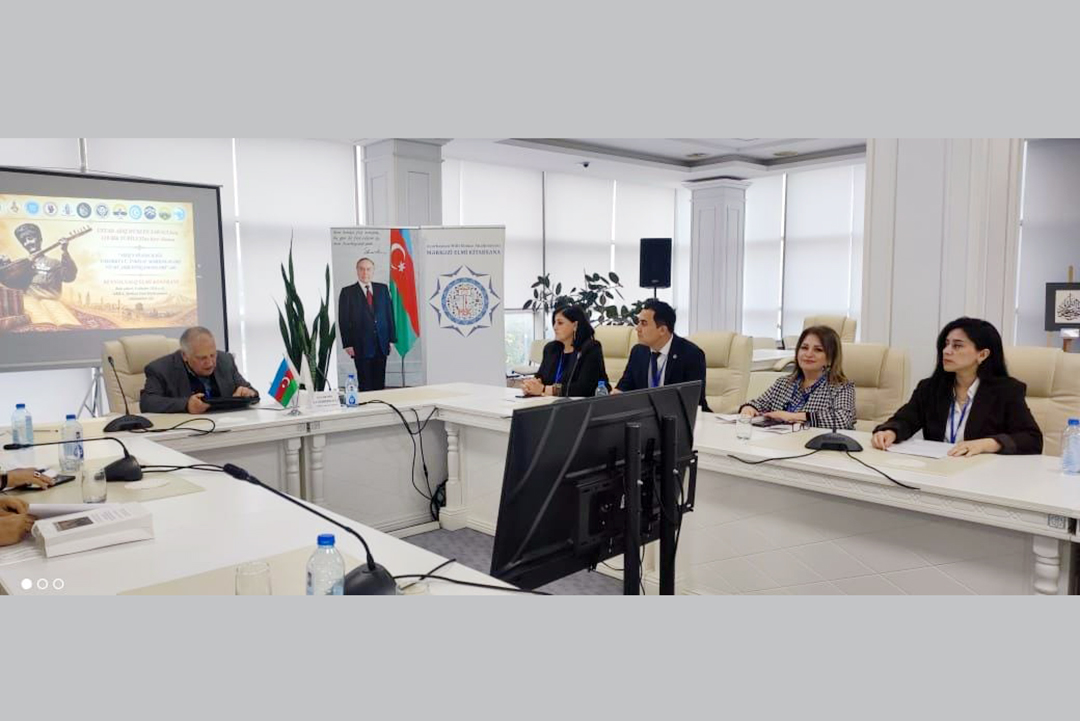
The scientific event brought together researchers to discuss the historical development of Azerbaijani ashiq art, its rich poetic and musical heritage, and contemporary research directions. The first session was chaired by Professor Ramazan Gafarli, Doctor of Philological Sciences, Head of the “Dede Gorgud” Department at the Institute of Folklore of ANAS and Editor-in-Chief of the scholarly journal Dede Gorgud.
During the session, Professor Ramazan Gafarli delivered a scientific presentation entitled “The Semantic Structure and Semiotic-Synergetic System of Ashiq Huseyn Sarajli’s Lyric and Epic Creativity”.
In his presentation the distinguished artist’s creative legacy was analyzed within the framework of the interrelationship between contemporary folklore studies, cultural semiotics, cultural memory, performance theory and synergetics.
Particular attention was devoted to the interactions among the saz (traditional stringed instrument), word, sound, intonation, the performance gathering, and the audience. It was emphasized that the artistic integrity of ashiq creativity should be studied not solely through written texts, but also through the unity of words and music, performance and audience, tradition and individual improvisation.
Thus, the presentation assessed Ashiq Huseyn Sarajli not merely as a performer who preserved and perpetuated classical epics, but as a creative artist who enriched their language, emotional structure, and performance possibilities. The semiotic-synergetic model presented at the conference opens up new opportunities for future research into ashiq art at the intersection of folklore studies, textual scholarship, musicology, narratology and cultural memory studies.