
NEWS
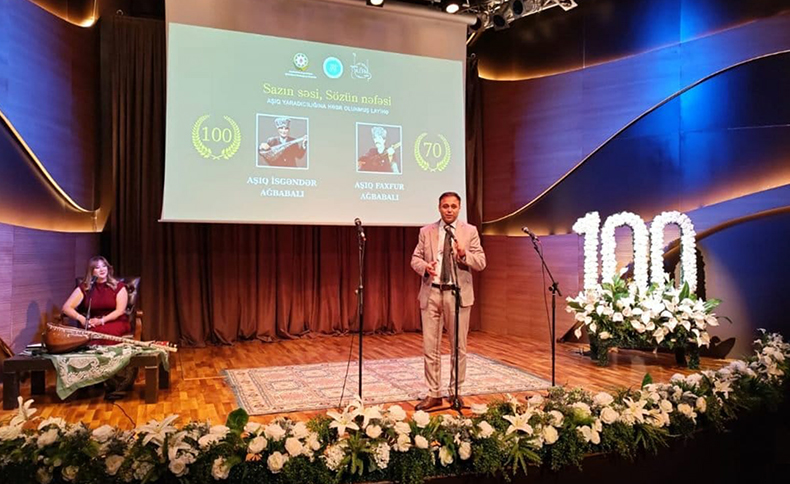
Hikmat Quliyev: Ashiq Isgandar Aghbabali was one of the master artists who preserved the rich tradition of the Aghbaba-Childir ashiq environment
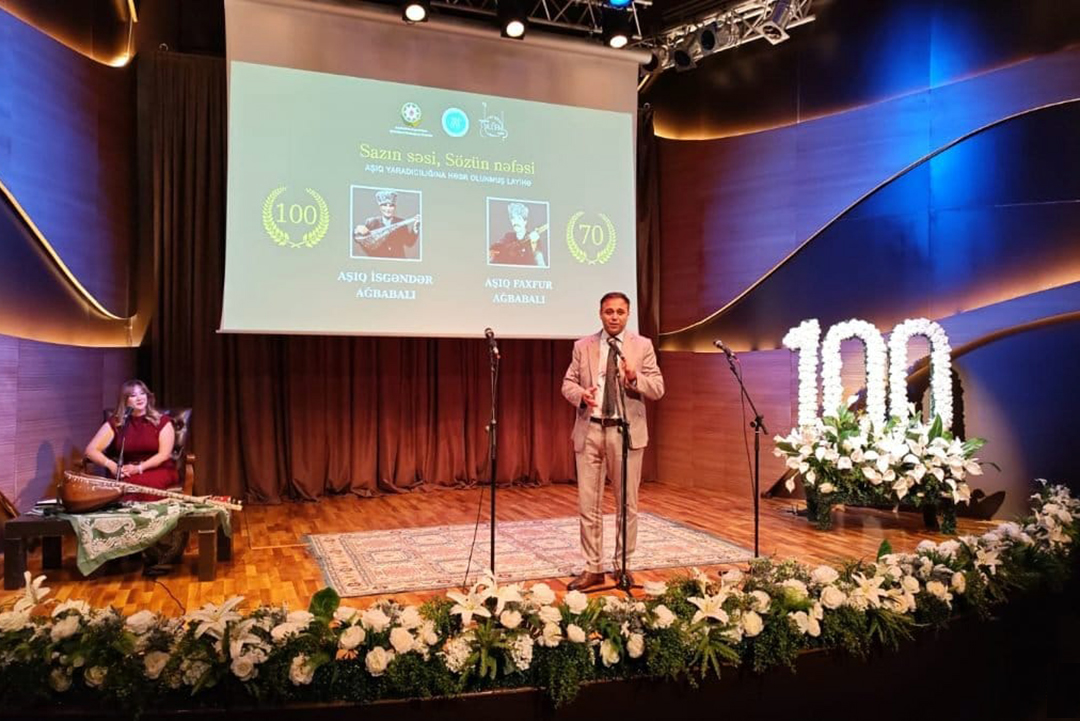
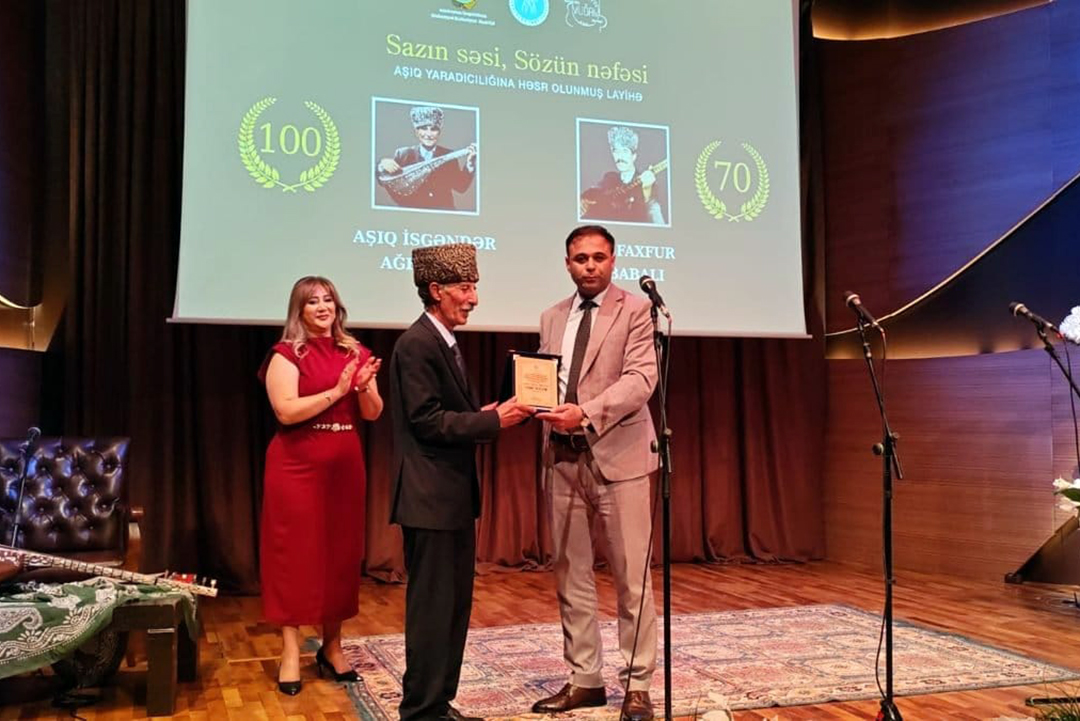
The event dedicated to the 100th anniversary of the prominent representative of Azerbaijani ashiqs’ art, Ashiq Isgandar Aghbabali and the 70th anniversary of his son, Ashiq Fakhfur Aghbabali, was held at the International Mugham Center as part of the “The Voice of the Saz – The Breath of the Word” project, jointly organized by the Ministry of Culture, the International Mugham Center and the Institute of Folklore of the Azerbaijan National Academy of Sciences (ANAS). Director of the Institute of Folklore of ANAS, Doctor of Sciences in Philology Hikmat Guliyev made a speech at the event.
Hikmət Quliyev noted that ashiq creativity was one of the fields of folklore that has played an important role in the formation, preservation and intergenerational transmission of the Azerbaijani people’s “saz-and-word” memory. In this regard, various regions of Western Azerbaijan, including Goyche, Aghbaba and other historical ashiq centers, were characterized as important folklore environments in which the rich traditions of Azerbaijani ashiqs’ art were formed.
Hikmat Guliyev mentioned that one of the important features of Ashiq Isgandar Aghbabali’s artistic legacy was the preservation of an extensive epic and ashiq repertoire in a living form within his memory. As an artist who kept folk epics alive not only as part of his performance repertoire, but also within the ashiq memory, he constituted an important link in the Aghbaba–Childir ashiq tradition. The preservation of the creative legacy of master artists of previous generations in his artistic memory and its transmission to subsequent generations was one of the important factors demonstrating the continuity of the master-apprentice tradition.
Hikmat Guliyev noted that the project jointly implemented by the Institute of Folklore of ANAS and the International Mugham Center was not limited to commemorating the masters of ashiq art and marking their anniversaries. One of the main objectives of the project was to reintroduce the individual environments, master artists, performance traditions and artistic memory of Azerbaijani ashiqs’ art into the contemporary cultural environment and to ensure the scholarly and cultural circulation of this heritage.
Concluding his speech, Hikmat Guliyev noted that such scholarly and cultural projects aimed at studying, promoting and preserving the folklore of Western Azerbaijan, while supporting the state policy pursued in relation to Western Azerbaijan, also contribute to the preservation of the region’s rich cultural heritage, folklore memory and traditional artistic forms and to their transmission to future generations.