
NEWS
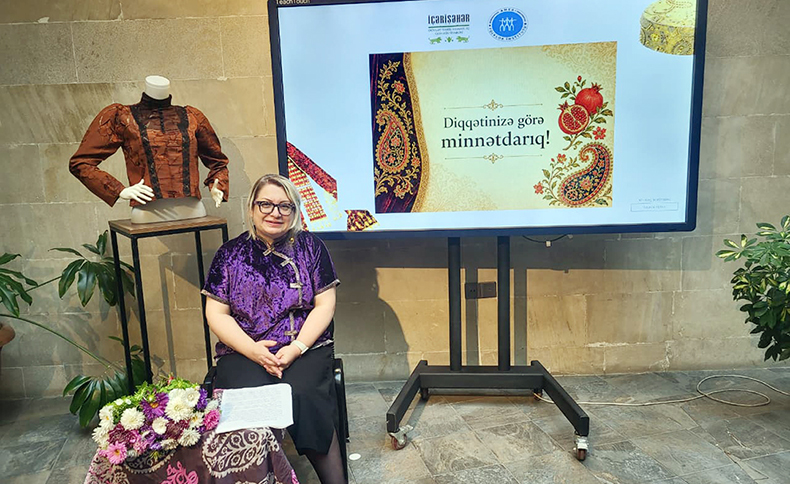
Afag Ramazanova made a presentation at the event “National Clothing Day”
On the 19th of September in 2026 a series of events were held in Icherisheher as part of “National Clothing Day”.
As part of the events, exhibitions, scientific-practical seminars and various presentations were organized focusing on the history, ethnographic features, socio-cultural significance and contemporary presentation opportunities of Azerbaijani national clothing culture.
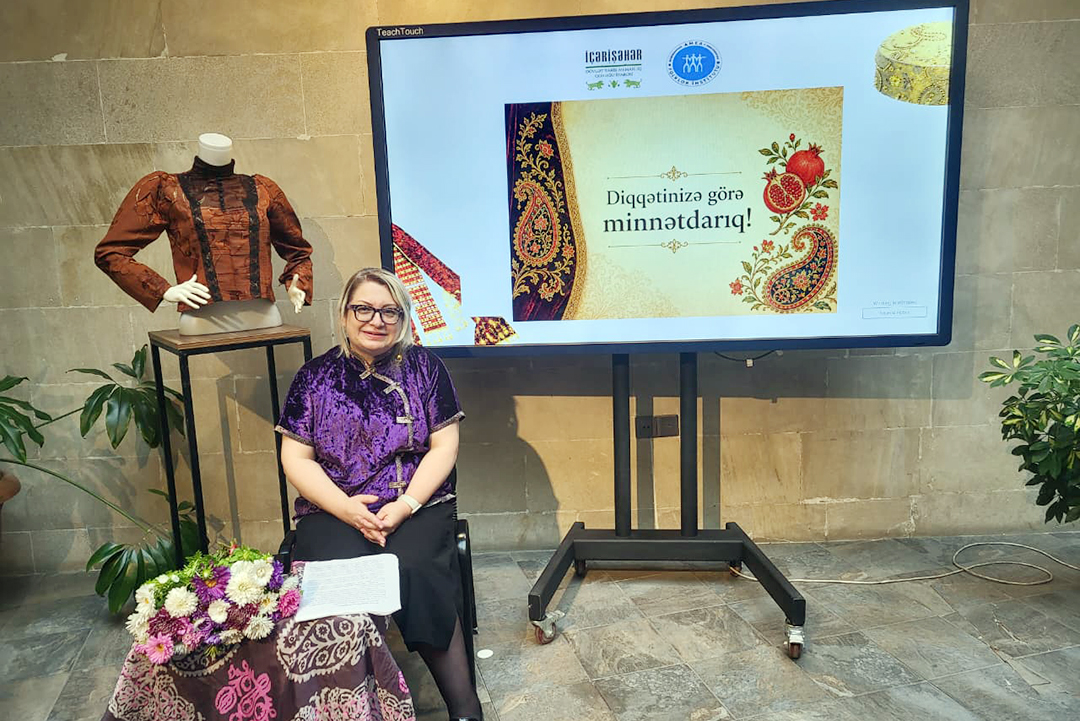
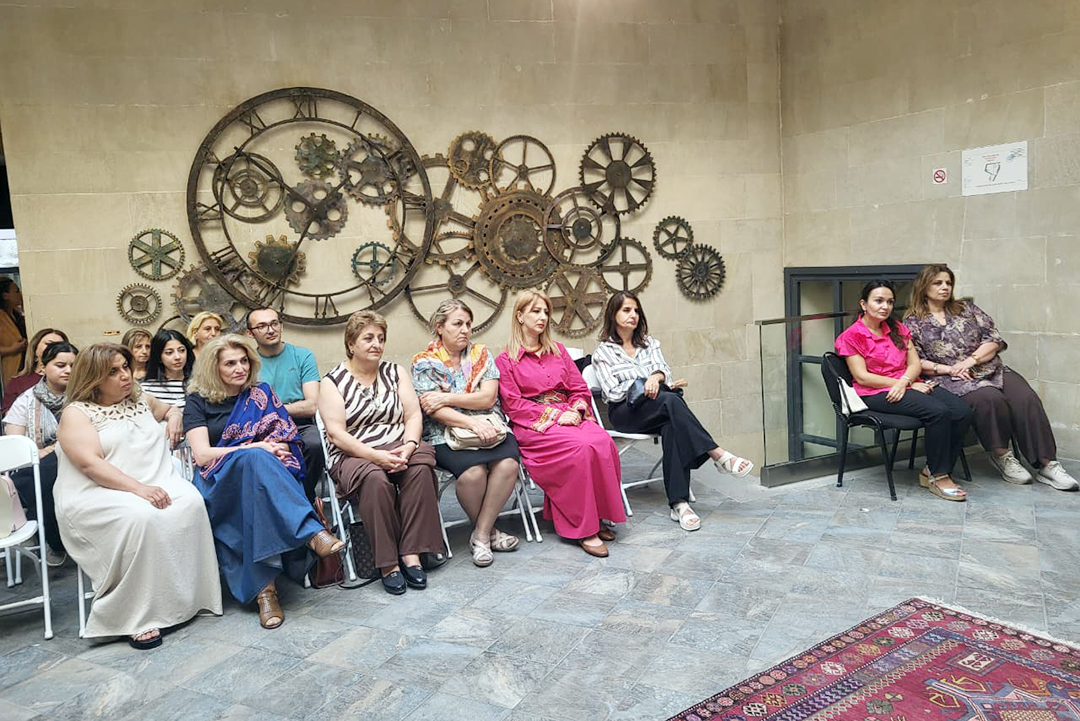
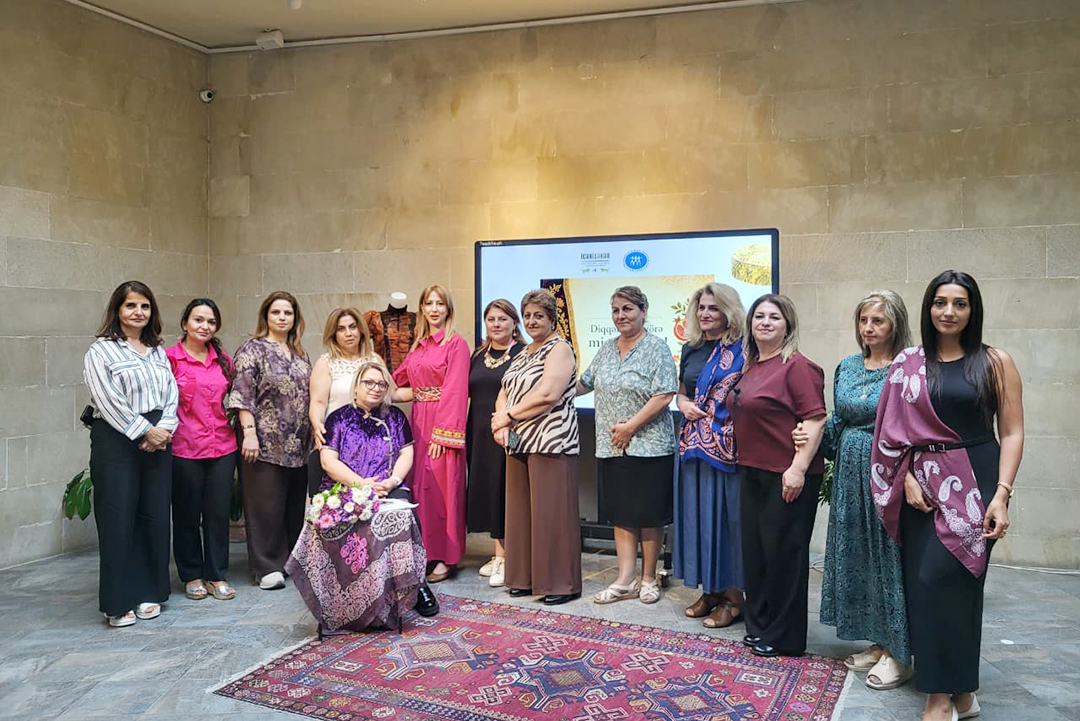
Within the framework of the scientific-practical seminars held at the Baku House of Photography, Afag Ramazanova, Deputy Director of the Institute of Folklore of ANAS, PhD in Philology and Associate Professor, made a presentation entitled “National Clothing: Socio-Cultural Codes and Contemporary Approaches”.
In her presentation Afag Ramazanova noted that national clothing was not merely a household attribute inherited from the past, but an important carrier of cultural memory that embodies the history, aesthetic taste, worldview, social relations and national identity of a people. The folklorist scholar noted that the establishment of “National Clothing Day” made it possible to approach national clothing not merely as a museum exhibit, but as a form of living cultural heritage. In this regard, the scholarly study and promotion of national clothing, as well as the transmission of traditional knowledge and skills to the younger generation, are of particular importance.
In the presentation the socio-cultural codes conveyed by national clothing were grouped into gender, age and marital status, social status, occupation, regional identity, ritual and ceremonial, ethno-cultural and aesthetic codes.
Afag Ramazanova noted in her presentation that in traditional Azerbaijani society, clothing functioned as an important visual code that identified a person’s gender, age, family, social status, occupation and regional affiliation.
At the end of her presentation Afag Ramazanova mentioned that in the contemporary period, national clothing was kept alive not simply through the repetition of traditional forms, but through the continuation of the cultural memory and symbolic content embodied in those forms within a new socio-cultural environment. According to her, the incorporation of national clothing elements, traditional cuts, fabrics and ornaments by contemporary designers enables this heritage to survive in new aesthetic forms. The speaker noted that national clothing was not merely an example of dress, but a “visual folklore text” read by society, with each of its elements functioning as a carrier of a particular socio-cultural code, while folklore texts transmit the semantics of these codes from one generation to another while preserving them.
Subsequently, the exhibition “People of a Century” was presented at the Baku House of Photography. Scientific-practical seminars were also held on the historical development of Azerbaijani clothing culture and Safavid heritage, as well as on the history of national clothing.
It should be noted that an exhibition featuring examples of Azerbaijani national clothing was organized at the Gosha Gala Square, along with a display of historical costumes used in the film “Taghiyev” presentations of national and ethnic clothing, performances of national dances, and displays of collections by local designers.