
NEWS
The eternal friendship between Azerbaijan and Uzbekistan draws strength from our historical roots and folklore traditions
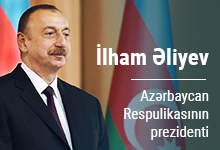
The meetings and extensive discussions held on the 23rd of August in Tashkent between President of Azerbaijan Ilham Aliyev and President of Uzbekistan Shavkat Mirziyoyev once again demonstrated that Azerbaijan–Uzbekistan relations are consistently deepening across political, economic, humanitarian, and strategic spheres. The Treaty on Eternal Friendship, signed during the visit, is an important political document reflecting the essence of relations between the two states and peoples, while establishing a strong long-term legal and political foundation for mutual trust and brotherhood.
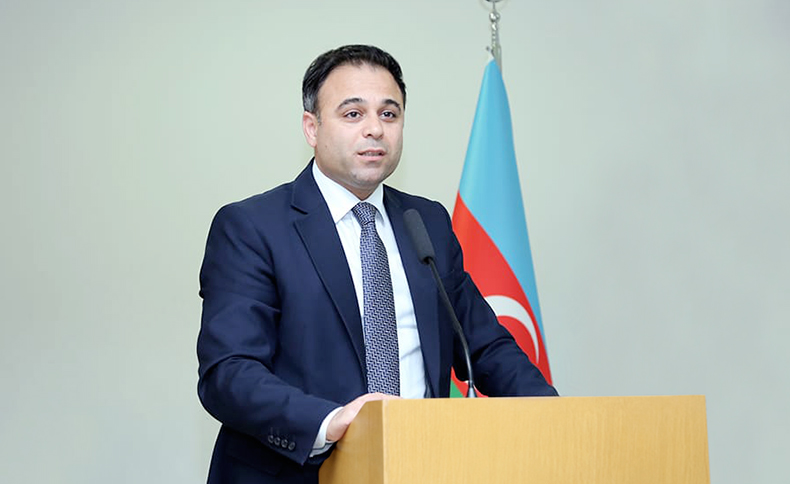
Director of the ANAS Institute of Folklore, Doctor of Sciences in Philology Hikmat Guliyev, made these remarks in an interview with AZERTAC.
The director noted that one of the points particularly mentioned in the statements of President Ilham Aliyev and President Shavkat Mirziyoyev is that Azerbaijan-Uzbekistan relations stem not only from contemporary political and economic interests, but also rest upon deep historical, cultural and spiritual roots. Common historical memory, shared spiritual values, linguistic and cultural affinity, literature, folklore and traditional culture are the principal carriers of the sense of kinship that has developed between our peoples over centuries. There is an organic connection between the current high level of political and economic cooperation between our states and our historical and cultural heritage.
One of the important bridges in this regard is undoubtedly folklore. The shared folklore traditions of the peoples of Azerbaijan and Uzbekistan and their common cultural heritage rooted in ethnic kinship are among the important factors constituting the historical and cultural foundations of the close relations existing between our states and peoples. From this perspective, folklore is not merely a memory of the past; it is also a living cultural bridge that enables our peoples to understand one another more deeply, facilitates the scholarly study of shared spiritual values and contributes to their revitalization within the framework of contemporary cooperation. We regard the systematic ties established in recent years by the ANAS Institute of Folklore with higher education and research institutions in Uzbekistan as one of the significant manifestations of this broader political course in the scientific and humanitarian sphere.
International symposia and conferences held with the participation of Azerbaijani and Uzbek scholars demonstrate the practical outcomes of our academic cooperation. Scientific events organized around such topics as “National Identity and Cultural Heritage in the Turkic World”, “Issues in the Comparative Study of Folklore of Turkic Peoples”, “Current Issues in Philology and Art Studies” and “Theoretical Issues of Ethno-folkloristics” provide Azerbaijani and Uzbek folklorists with opportunities to exchange views on common research problems, identify new areas of investigation and strengthen academic ties among the young researchers.
The important dimension of this cooperation is the study of folklore not merely at the textual level, but together with the socio-cultural environment in which it emerges and continues to exist. One of the key tasks facing Azerbaijani and Uzbek folklore studies is not only to comparatively investigate shared folklore phenomena, but also to determine how these phenomena continue to function in contemporary socio-cultural environments, how they are reproduced and how they undergo transformation in new spaces of communication.
From this perspective, the implementation of joint fieldwork, the digital archiving of folklore materials, and comparative folklore studies based on contemporary methodologies offer particularly promising prospects.