
NEWS

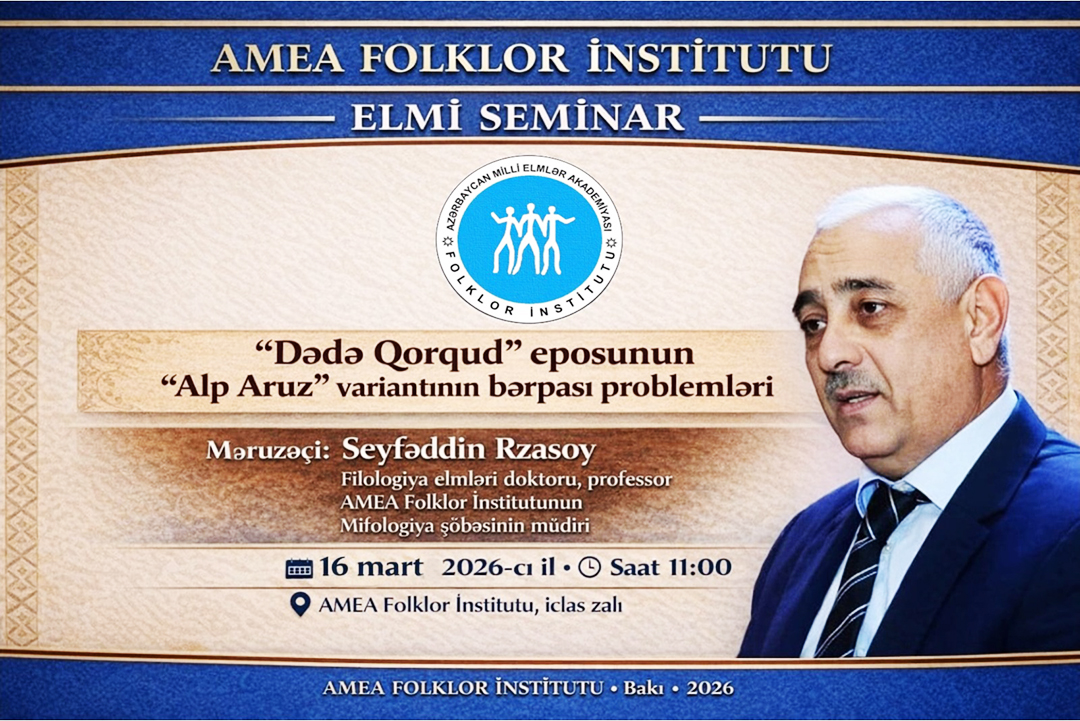
The scientific seminar titled “Problems of the Restoration of the “Alp Aruz Variant” of the epic “Dede Gorgud” dedicated to “Science Day” was held.
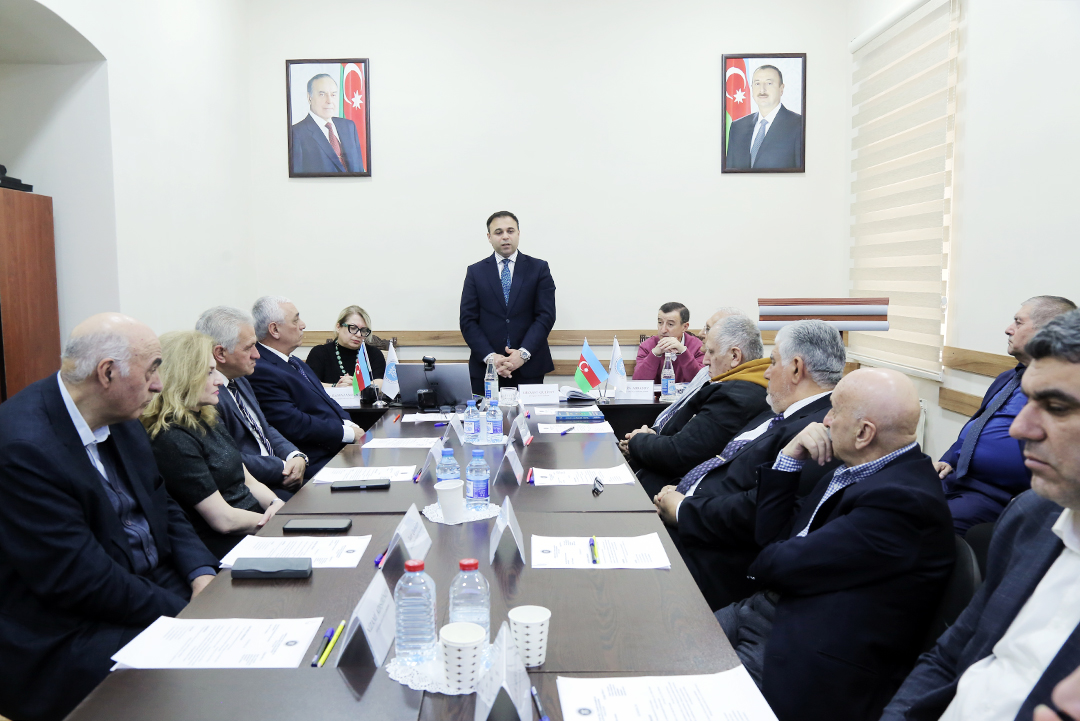
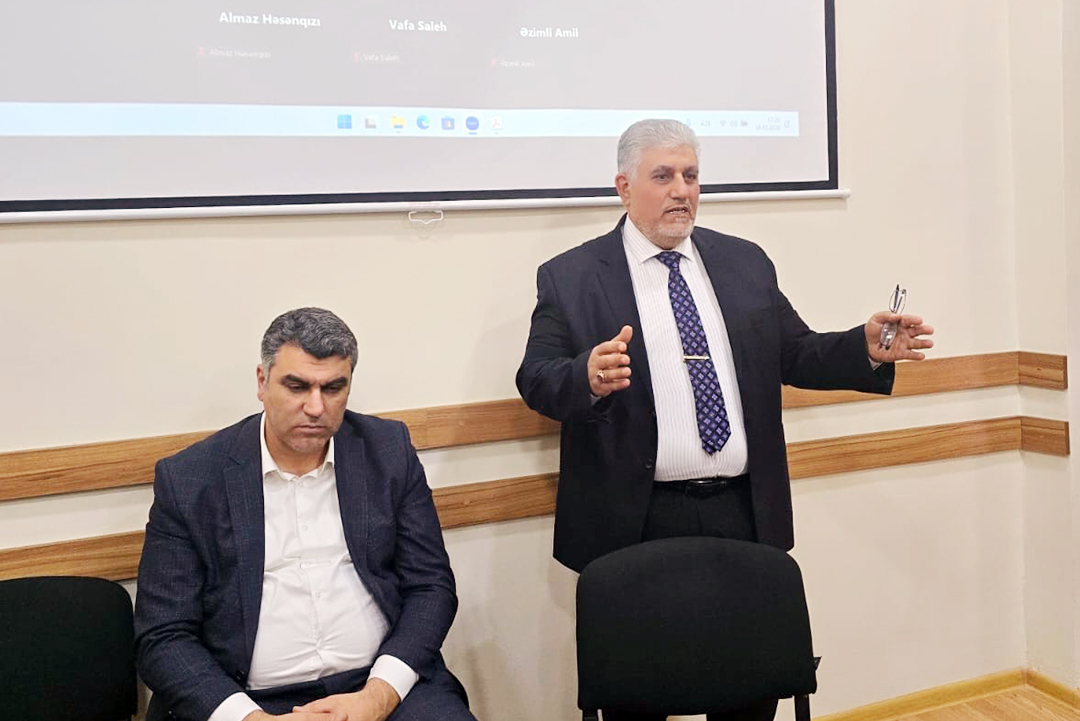
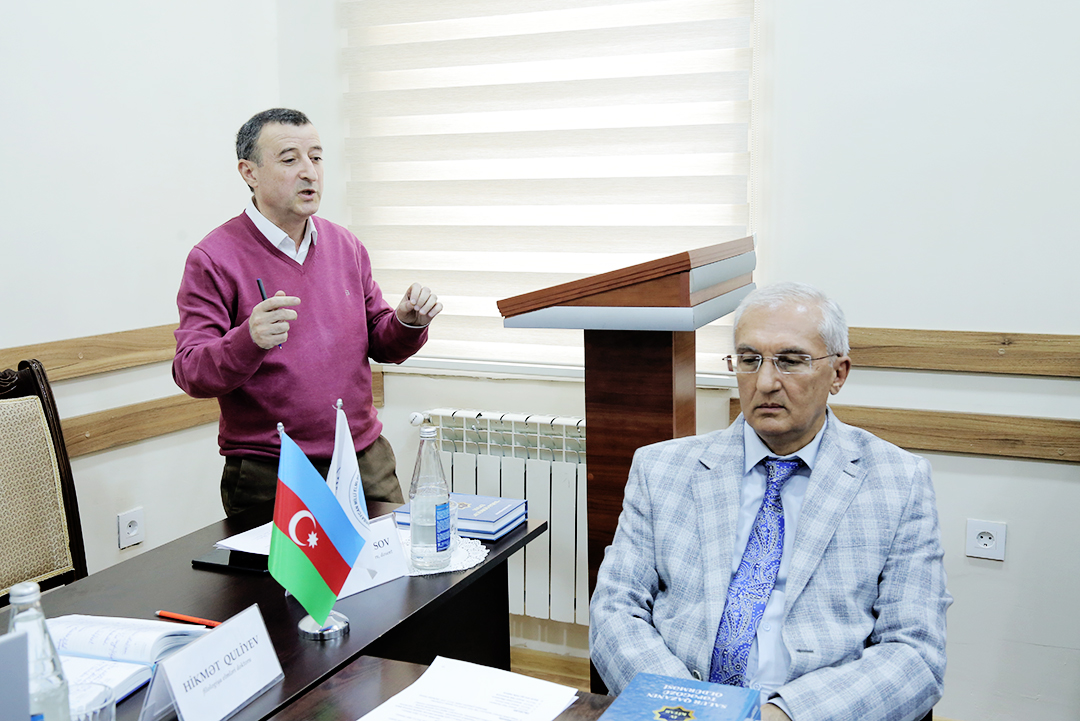
The seminar dedicated to “Science Day” was held at the Institute of Folklore of ANAS. The seminar, conducted in a hybrid format, was attended by the staff of the institute, including doctoral students and dissertation candidates.
Opening the event with an introductory speech, Director of the Institute of Folklore, Doctor of Sciences in Philology Hikmat Guliyev, spoke about the significance of “Science Day,” established by the Decree of the President of the Republic of Azerbaijan, Ilham Aliyev, dated April 9, 2018. The director mentioned that this day was of special importance in terms of evaluating achievements in various fields of Azerbaijani science and identifying new perspectives for its future development.
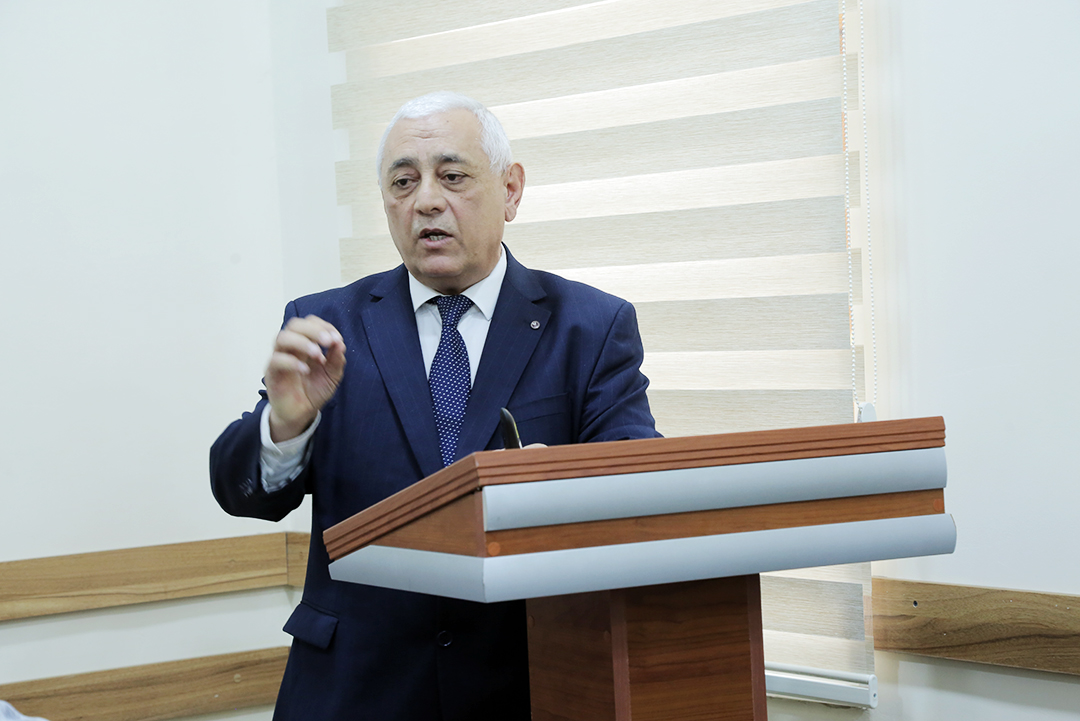
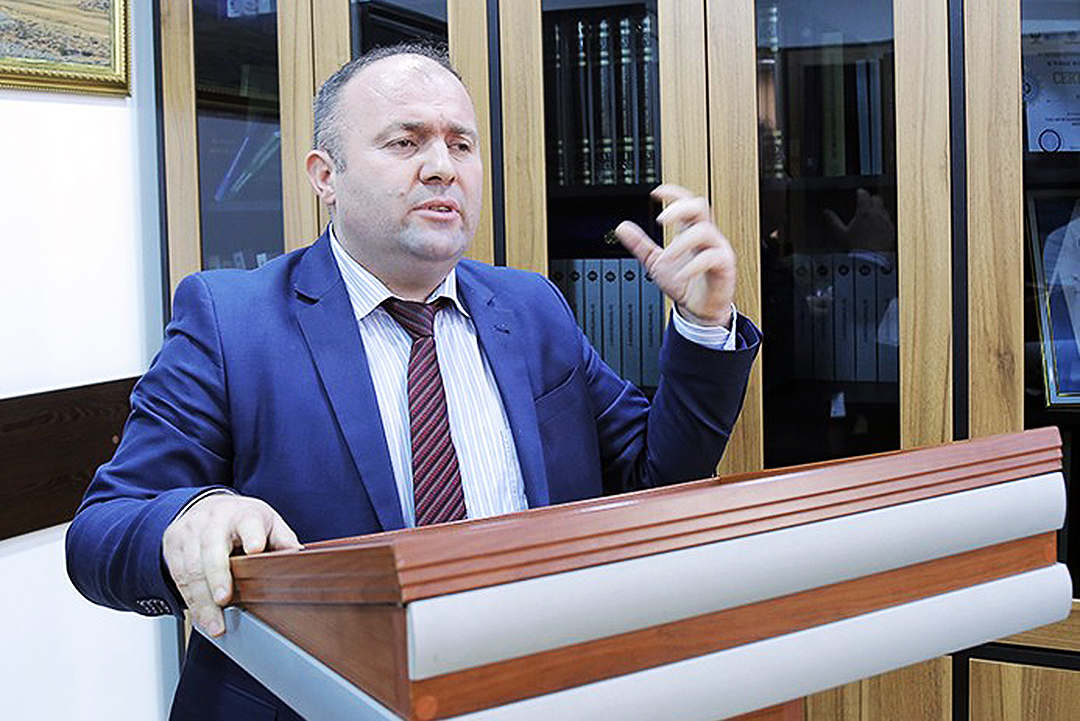
Then Head of the Mythology Department of the Institute of Folklore Professor Seyfaddin Rzazoy made a presentation on the topic “Problems of the Restoration of the “Alp Aruz Variant” of the epic “Dede Gorgud”.
The scholar first analyzed, on scientific grounds, the idea of the existence of a more ancient epic layer – the “Alp Aruz variant” hidden beneath the currently known text of the “Book of Dede Gorgud”. The diachronic stages of the development of the epic were also explained during the seminar.
In conclusion, Hikmat Guliyev noted that it is important to consider that the epic “The Book of Dede Gorgud” had come down to us in manuscript form. In other words, it represents a “snapshot” of one of the performances of an oral text that was later transcribed into writing. Thus, the Dresden manuscript containing the preface and 12 tales, the Vatican manuscript with 6 tales, the later discovered Gunbat-Turkmen Sahra copy, as well as the Bursa manuscript, are all forms of the epic “Dede Gorgud” that emerged and were recorded in the context of specific historical and social conditions. Therefore, approaching the epic from the perspective of its variants is of conceptual importance. By addressing the issue from this theoretical and methodological perspective, the scholar mentioned the necessity of conducting systematic and conceptually grounded research in folklore studies.
At the end, the participants expressed their gratitude to the speaker and wished him success in his scientific research.